Agentic AI
We master the agentic chain end to end: from choosing the model to the harness, from the orchestrator to the runtime. AI agents, business automations, AI in your software, AI infrastructure.

Agents that work in your tools, under your control.
Each agent connects to your tools with limited rights, human approvals at the steps that matter and a log of what it does. The model is interchangeable: you don’t depend on one provider.
What an agent can do for you
A few examples, not a closed list: whenever a task comes up often and follows rules, an agent can probably take it on.
Sales and prospecting
Prepare a meeting, qualify requests, follow up at the right time, update the CRM…
Customer support
Sort requests, suggest a reply, summarize a history, hand over to a person when needed…
Finance and administration
File invoices, match payments, chase late ones, track costs…
Operations
Track orders, monitor automations, spot what is out of the ordinary, produce a weekly report…
Development
Review code, write tests, document, prepare a release…
Tailor-made
If your task isn’t here, that’s normal: each agent is built around the way you work. Describe it to us, and we’ll tell you whether an agent can take it on.
Anatomy of an agent
An agent is more than a model. Before each decision, it receives a stack of layers, like a burger. Composing them with care is a large part of its reliability.

The instructions
Its role, its tone and its limits: what it must do, and what it never does alone.
Your context
Your business rules, your procedures, your vocabulary. What makes it useful for you.
The skills
Know-how written once and reused: how you sort, follow up or approve.
The memory
What it remembers from previous tasks, so it doesn’t start from zero.
The current task
What it is asked to do, what it has already done and what its actions produced.
The tools
Access to your software, with precise rights: read, write, send, or only suggest.
The execution frame
An isolated environment, human approvals in the right places and a log of everything it does.
Our engagements
Four types of engagements around the agentic chain.
Agentic automations
Custom agents for your business processes, connected to your tools, with suitable rights and human approvals.
AI embedded in your apps
AI directly in the software you already use: yours, an ERP, a CRM.
AI infrastructure
We set up the environment where your agents work, with commercial or open source solutions: Codex, Claude Code, Appstrate, LangChain. Installation on your servers, rights, safeguards and onboarding of your team.
AI training
Your team learns to work with AI, or to develop on its own with agents.
Our work
Agents at work, at our own company and at our clients.
 IA
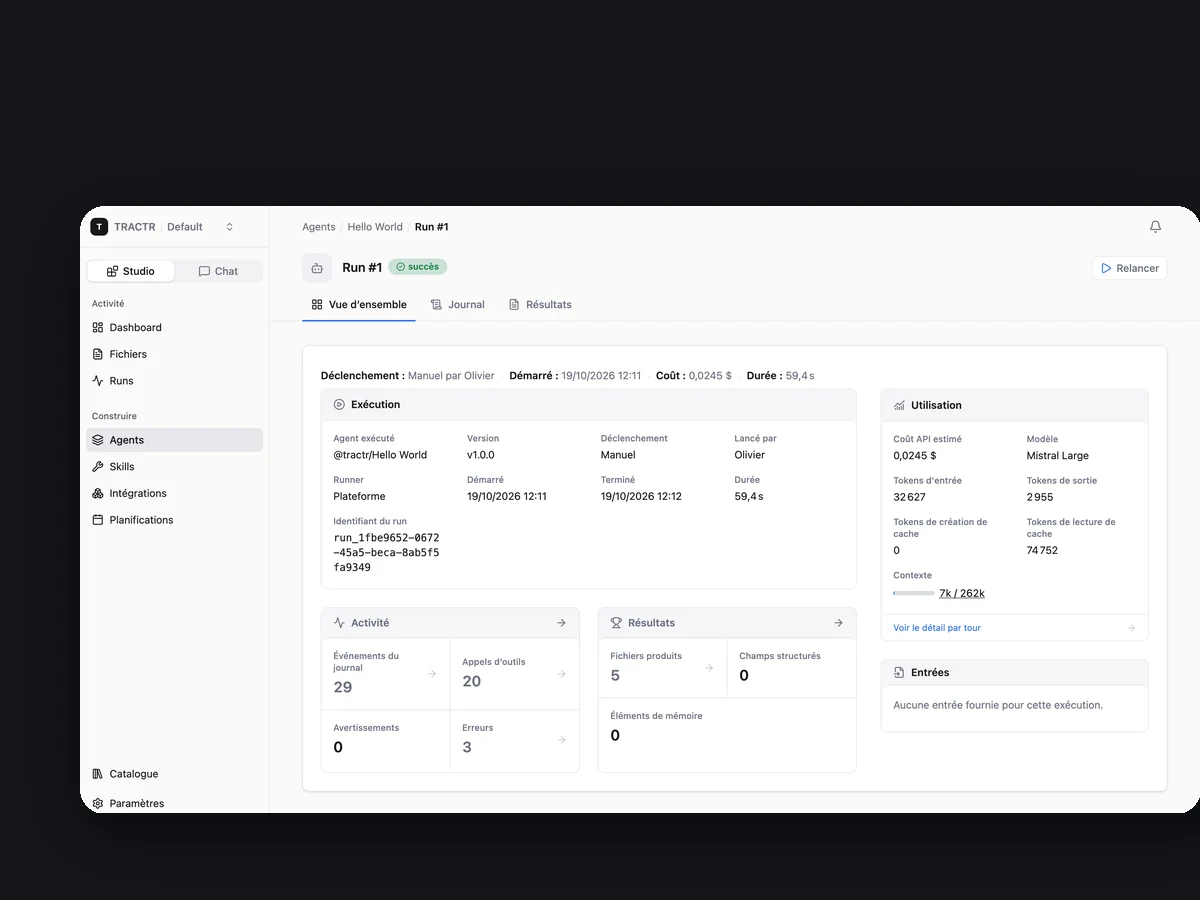
Appstrate · AI infrastructure · Open source platform
Creation of an open source platform to run AI agents, isolated and under control
Afoodi · Restaurants · AI platform
Creation of a platform that runs AI processing for restaurants
 IA
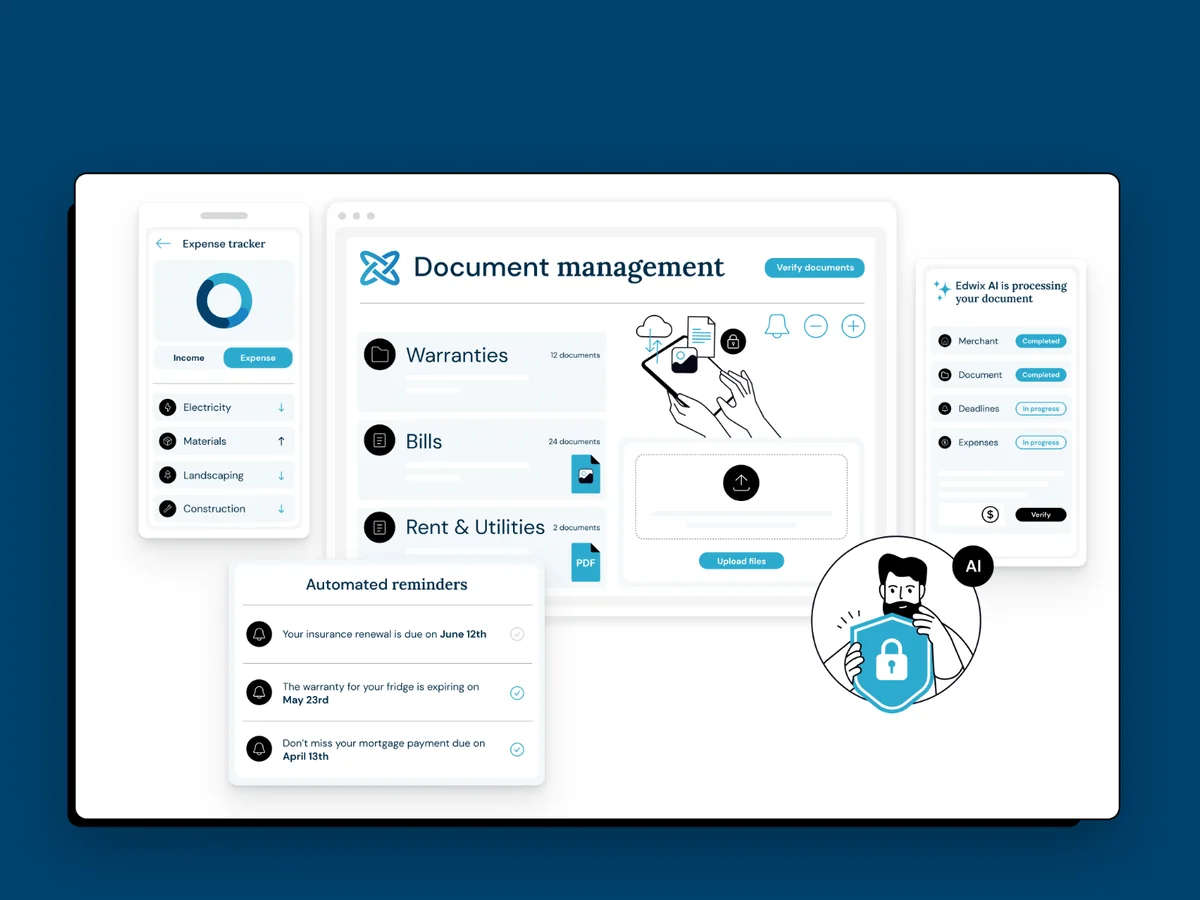
Edwix · Real estate · Web app, AI
Creation of a home document management platform with AI extraction
Our services
Three ways to work together, from the plan to your team's independence.
Scoping
A review of your tools, your business and your opportunities. You leave with an action plan and a first concrete deliverable: a prototype, a mockup or a specification.
Learn more
Build
We build and test your application or AI system, with an agreed scope and budget.
Learn more
Training
Training that starts from your tools and how you use them.
Learn moreFrequently asked questions
Do we need an agent, or is a simple automation enough?
If the task always follows the same rules, a classic automation is simpler and cheaper. An agent is useful when it has to read, understand and decide case by case. Scoping settles it, and we’d rather tell you when an agent isn’t needed.
What happens when the agent makes a mistake?
We plan for errors from the design stage: human approvals at the steps that matter, limited rights and a log of what the agent did. Errors are analyzed, then the agent’s instructions are corrected.
Is my data used to train a model?
It depends on the model and its contract, and we choose it with you according to the confidentiality required. Some providers commit not to train on your data, and open models can run on your own servers.
Can we switch models later?
Yes. The agent is built so the model is interchangeable: if a better model comes out, or if a provider changes its terms, you switch without rebuilding.
How do we measure the gain?
Before building, we set with you what we measure: time saved, errors avoided, processing time. Once the agent is in service, its monitoring tracks those same measures.
Which processes should we automate first?
Those that come up often, follow rules and whose result is easy to check. Scoping ranks your opportunities by gain and risk, then sets the order.
How much does it cost?
Always a fixed price, never hourly. Scoping sets the price of the build before it begins, and it doesn’t move. An agent from the catalogue has a fixed price, with no scoping.
How do we get started?
With a first 30-minute call, free of charge. It tells you which scoping suits you, or whether an agent from the catalogue already meets your need.
The next step
What are we moving forward together?
An idea, an existing product, a task that takes too long. Tell us where you're starting from.
Let's talk about your projectA first conversation to understand your context.
Keep exploring
Based on your profile
StartupsSMEs and mid-sized companiesLarge enterprisesInstitutions and organizations